Logos, Word, Fire

I am listening to a lecture from Liberty Classroom called Mythology and Western Civilization. I’m on the 3rd lecture in the last 9 minutes when the professor talks about the pre Socratic philosophers, namely Heraclitus. They notice that nature works in patterns 4 seasons- 1, 2, 3, 4, and never 5, but back to 4 again. They saw the universality of man, that we are born, we grow, we hit middle age, we die. They wondered what animated mankind. They saw earth, wind, water, fire as the 4 elements that animated the world, but that it was fire that animated humans.

They believe that the 4 elements broke apart but that one of the elements is at the beginning or the originator. They couldn’t figure it out and didn’t understand but they asked the question. Later (maybe 100 years?) Zeno another Greek, comes along and founds a type of religion called Stoicism. He does this during a time of Greek change. Classical Greek has fallen and they have lost the polis, or the system of independent city states, and he is caught at this time of upheaval, he forms a popular belief where he lectures from his front porch (that is where the word stoic comes from).

As that world is changing Zeno says that the people will no longer find their identity in the Greek city state, polis, but in the universe. At the heart of Zeno’s teaching is the idea of Heraclitus about fire being the originator element, that word coined by him is Logos, the beginning of all things, the originator of all things, the word.

edit-post-e280b9-breathings-e28094-wordpress.com-2020-10-21-13-18-34

600 hundred years later St John would use that phrase in the most beautiful 14 word sentence. He writes it in Greek and uses the term that is 600 hundred years old, LOGOS. The word that John uses, the word he baptizes, is word, the primary animator of all matter. It is fire, it is imagination. This fire is the beginning of all matter and will be what consumes and is the end of all matter, Fire, Logos.

Whew! Well when I heard all of that last night I was incredibly struck. I feel like we are in a time of our society that is upheaval and change, that Fire was the message we were talking about from that video from the woman in Paris about Norte Dame. And that maybe it is a shift from identifying ourselves as a religious belief, or maybe even a citizen, and instead as a universal being. Idk. You got any ideas.

IN Christ or Belief and Authority?

“The Gospel is supposed to be about Life IN Christ. The Apostle Paul used this term over 150 times in his writings and Jesus lived IT and mediates IT. Life IN Christ is about awakening to the reality of the nature of God and His/Her/Its presence in all of creation and as the source of existence and being. It is also about the realization of your oneness with these realities. When the reality and realization of this Life is “lost” in religion, two things are substituted–belief and authority. These “beliefs” tend to be about a set of doctrines and extraordinary or miraculous things. Authority is usually centered in some combination of holy books and human leaders & organizations. As Richard Rohr points out in The Universal Christ, neither Jesus nor Paul were limited by belief structures or authority. Both Jesus and Paul were challenged for exceeding or lacking authority in what they taught and did and for not acting within the limits of certain beliefs. Both challenged man made authority clothed in divine garb and both challenged conventional or false beliefs as they relied on direct knowledge and experience of and in God. Paul spoke often of liberty or freedom IN Christ and a refusal to limit or yoke oneself to man made religious codes or even foundational, spiritual laws that should be surpassed as one matures IN Christ (the proverbial “schoolmaster”). He was also careful to warn that liberty was not license, as in licentiousness. Oddly its the “saints” and the “sinners” who have no use for “law” and “code”.

I never cease to be amazed at how much power belief in things not directly known and dependence on authority rules people’s thoughts and vision. It did mine for many years so I should not be surprised but folks are settling for a “mess of pottage” (a bowl of stew) when the birthright of the fulness of Divine Nature is being offered!”

– Philip McLemore from a FB group Meditate with Phil

Faith and Testimonies of False Prophets

My husband and I are listening to Carl Jung’s autobiography, “Memories, Dreams, Reflections”. In it he rehearses a couple of episodes with his friend Sigmund Freud, who, in his quest to prove religions were fake and there is no God, turned his own psycho analysts beliefs into dogmas and practices, thus inadvertently creating a religion. Then we are reminded that Freud admits that all people have their own neurosis. When Jung cannot accept Freuds dogmas, and when he asks difficult questions, Freud literally faints. He simply cannot let go of his own neurosis and instead of succumbing to a psychotic break, he temporarily loses consciousness. Hahaha! This belief in a prophet, one that cannot fit the scriptural definition, is a neurosis, but fortunately they have large groups to support each other in their false belief. I truly would hate to see those who aren’t capable of facing those neurosis be pushed too hard that they lose it, it meaning their own individual psychosis. (I’m tempted in the extreme to say though, that maybe that’s the point of the whole exercise).

Anyway, it’s a good book. And though Jung never claims to be a prophet, I think he is much more likely to be one than any of the leaders of the lds church.

https://www.washingtonpost.com/religion/2019/04/04/mormon-church-allow-baptisms-blessings-children-lgbt-parents-reversing-policy/?noredirect=on&utm_term=.8b515e8d738b

Of Prophets, Men, and the way to Be

These are a sorting through of thoughts that are not fully formed, no conclusions arrived at, just some observations that pose so far unformed questions in my mind.

These that follow are not meant to represent real definitions or beliefs, neither the tenets or dogmas of a certain religion, but rather the imagination of my mind and my own personal understanding of things.

Prophets: Just and righteous men, slowly the idea for me includes women as well but admit that more often women leave no written account (?), holy men, those chosen to write the scriptures and hand them down. Abraham, Issac, Jacob, John, Paul, Nephi, Alma, Mormon, Moroni. In my mind these men were symbols of the paragon of virtue, having lead moral, up straight, chaste lives. Virtuous.

Men: Other writings that I have been exposed to that also seem to be examples of men who also either saw God or had an awakening, transcendent, experience. Joseph Smith, Alan Watts, Carl Jung, Max Skousen. These man are all much closer in time and knowing than the “prophets”. Joseph Smith has many dubious reports left behind about him, Alan Watts had multiple wives and lovers frequently committing adultery. Carl Jung also had a wife who he cheated on for many years. Max Skousen loved a movie that showed that having sex was a good thing, and wrote a book showing that a rated R movie is a guide on the Holy Ghost and spiritual journey.

My imagination holds a strong dichotomy of one sort of man on one hand, and an entirely different sort (with Watts and Jung just shocking) on the other. Totally different. Yet both, as far as I can tell, knew and understood God better than any others I can find.

Maybe the prophets were flawed, morally curved, individuals too? Maybe the way to Be isn’t so much about the mistakes we make in life, but more our search for deeper hidden things, our ability to be wrong and unsure in search of truth is our way to Be?

A New Way

“Rather than preaching for or against a mighty power to which all must bend the knee, Bakhtin (under the Soviet empire) is looking for a way out. Not for a challenger or some new authoritative discourse, but rather a new way to be, a new way of voicing in a manner more aligned with things that grow and adapt.” – Daymon Smith

Not everyone believes their current understanding should be preached, or taught at all, often just hoping instead that others may find value in letting them have and express beliefs, those things that they imagine.

Not everyone believes that their current understanding is The One Correct Understanding, or that what they believe is superior and all other beliefs must bend the knee.

Not everyone takes the things they currently believe and makes of them hard conclusions, conclusions turned into tools or weapons then used to challenge, berate, argue, defend, abuse, debate until they have destroyed their opponents. Some people don’t even view others as opponents at all, even if they strongly disagree with others.

An authoritative discourse ……. authority …. as far as I understand this word, and my personal experiences on this earth with things or people who wear this word in a sense like their superhero or godlike powers, authority seems to be an attempt to take the infinite and make it finite, to take God and His creative powers, and to squeeze it through our tiny minds and funnel it out onto those of who they have authority.

A new way. Some few have found this new way of being, making the way new only to the individual, or, as I’ve read in scripture, taking of these materials ….. and that in the new way is us becoming our own little creators, taking of the way that already exists but is very obscure, and creating for ourselves a new way to be. Be something that grows and adapts.

Continue reading “A New Way”

Limiting Ourselves

Heads up, opinion piece:

Last fall my oldest child had a girlfriend (who he is now broken up with) who, he slowly discovered, was frequently mean. She hated homeschoolers (red flag that he ignored) and in conversation with him dug up findings, gathered evidence, and proved that he was stupid and never actually was given the availability of an education. He was, she knew and proved, uneducated. Her #1 piece of evidence:

Said child had never heard of Anne Frank.

There it is. The evidence. And it was true. He brought it up when we gathered together for our morning read aloud lessons and discussions. And suddenly this blanket of failure descended upon us all. We were all feeling the weight of being bound down by our own failures and stupidity. After a long silence I said out loud, “Well, what do we know about Germany, wars, WWII, and wars in general?” A verbal list began to appear as each child remembered things that we have learned.

*Albretch Druer, goldsmith, wood carver, engraver, artist and painter. Born in Nuremberg Germany, traveled extensively, world renowned, and especially his painting “A Large Piece of Turf”.

*”A Large Piece of Turf” – we learned that on the globe Germany is longitudinally near TN and that many of the same weeds that grow in our yard also grow in that country; plantain, dandelions, speedwell, yarrow.

*We learned that what is known about the various tribes that made up the goths, visigoths, and Ostrogoths were of Germanic tribes, that they converted to Christianity and were Arians (they did not believe in the trinity), and that they sacked Rome and spread far, even into ancient Hispania.

But nearer to our modern time, I urged the kids, what do we know about starting from the 20th century?

*Well, we know that WWI was purely political and that many college school boys had to take trains back to their home countries so that they could take up weapons against their classmates. And we know about the great Christmas truce where weapons were discarded and games and songs, and fun times were shared in no mans land.

*We learned that after WWI Germany was left destitute, poverty stricken, and that sanctions put on them afterward lead to economic collapse from the devaluation of the money.

*We know about Helmut Huebener, and his two young friends, and the story of how 17 year old Helmut was excommunicated by his local LDS church, and guillotined to death by the nazis.

*We know of Corrie Ten Boom.

*We know of Rick Steve’s travels through Germany.

*We know of, and Michael Jr studied, the ancient language of futhark.

And so we aren’t stupid, are we?

And we know many things, don’t we? And yes, as the mom I was never interested in teaching about Anne Frank, but now that we’ve hit upon something we don’t know we can take the time to learn of it. So we did. We all know of her though I still refuse to read her diary 📔*again*, first time for the kids though.

And here is my point from this long example. All American children are placed in schools every year, thousands of little people, and all taught the same thing, at the same age, in the same manner, expected to arrive at the same conclusions, follow that same path all leading to college and then the work force. School to Work, No Child Left Befind, Common Core. The result is millions of people with the exact same view, same vantage point, same small narrow keyhole to peer through in which to examine a full room. It is not the learning that public school recipients receive that to my mind is the problem, rather the plethora of things left out, and the narrow mindedness that those who looked at the same room, but not through the same key hole, are stupid.

We need more people looking at the same things, and in this example I’m talking about education, from a wider variety of perspectives. We need it.

Community

The following is a excerpt from Carl Jung’s autobiography Memories, Dreams, Reflections in chapter 2 “School Years”.

Several times my father had a serious talk with me. I was free to study anything I liked, he said, but if I wanted his advice I should keep away from theology. “Be anything you like except a theologian,” he said emphatically. By this time there was a tacit agreement between us that certain things could be said or done without comment. He had never taken me to task for cutting church as often as possible and for not going to communion any more. The farther away I was from church, the better I felt. The only things I missed were the organ and the choral music, but certainly not the “religious community.” The phrase meant nothing to me at all, for the habitual churchgoers struck me as being far less of a community than the “worldly” folk. The latter may have been less virtuous, but on the other hand they were much nicer people, with natural emotions, more sociable and cheerful, warmer-hearted and more sincere.

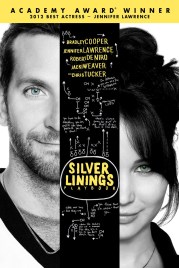
This reminded me of the movie Silver Linings Playbook. The families portrayed here were “less virtuous” than a religious community, but if a religious person could really perceive, they might see that these messy people were “much nicer people, with natural emotions, more sociable and cheerful, warmer-hearted and more sincere.”

11170611_ori.jpg

An Enormous Turd

The following is a excerpt from Carl Jung’s autobiography Memories, Dreams, Reflections in chapter 2 “School Years”.

One fine summer day that same year I came out of school at noon and went to the cathedral square. The sky was gloriously blue, the day one of radiant sunshine. The roof of the cathedral glittered, the sun sparkling from the new, brightly glazed tiles. I was overwhelmed by the beauty of the sight, and thought:

“The world is beautiful and the church is beautiful, and God made all this and sits above it far away in the blue sky on a golden throne and…” Here came a great hole in my thoughts, and a choking sensation. I felt numbed, and knew only: “Don’t go on thinking now!Something terrible is coming, something I do not want to think, something I dare not even approach. Why not? Because I would be committing the most frightful of sins. What is the most terrible sin? Murder? No, it can’t be that. The most terrible sin is the sin against the Holy Ghost, which cannot be forgiven. Anyone who commits that sin is damned to hell for all eternity. That would be very sad for my parents, if their only son, to whom they are so attached, should be doomed to eternal damnation. I cannot do that to my parents. All I need do is not go on thinking.”

That was easier said than done. On my long walk home I tried to think all sorts of other things, but I found my thoughts returning again and again to the beautiful cathedral which I loved so much, and to God sitting on the throne–and then my thoughts would fly off again as if they had received a powerful electric shock. I kept repeating to myself: “Don’t think of it, just don’t think of it!” I reached home in a pretty worked-up state. My mother noticed that something was wrong, and asked, “What is the matter with you? Has something happened at school?” I was able to assure her, without lying, that nothing had happened at school. I did have the thought that it might help me if I could confess to my mother the real reason for my turmoil. But to do so I would have to do the very thing that seemed impossible: think my thought right to the end. The poor dear was utterly unsuspecting and could not possibly know that I was in terrible danger of committing the unforgivable sin and plunging myself into hell. I rejected the idea of confessing and tried to efface myself as much as possible. That night I slept badly; again and again the forbidden thought, which I did not yet know, tried to breakout, and I struggled desperately to fend it off. The next two days were sheer torture, and my mother was convinced that I was ill. But I resisted the temptation to confess, aided by the thought that it would cause my parents intense sorrow.

On the third night, however, the torment became so unbearable thatI no longer knew what to do. I awoke from a restless sleep just in time to catch myself thinking again about the cathedral and God. I had almost continued the thought! I felt my resistance weakening. Sweating with fear, I sat up in bed to shake off sleep. “Now it is coming, now–it’s serious! I must think. It must be thought out beforehand. Why should I think something I do not know? I don’t want to, by God, that’s sure. But who wants me to? Who wants to force me to think something I don’t know and don’t want to know?Where does this terrible will come from? And why should I be the one to be subjected to it? I was thinking praises of the Creator of this beautiful world, I was grateful to him for this immeasurable gift, so why should I have to think something inconceivably wicked? I don’t know what it is, I really don’t, for I cannot and must not come anywhere near this thought, for that would be to risk thinking it at once. I haven’t done this or wanted this, it has come on me like a bad dream. Where do such things come from? This has happened to me without my doing. Why? After all, I didn’t create myself, I came into the world the way God made me–that is, the way I was shaped by my parents. Or can it have been that my parents wanted something of this sort? But my good parents would never have had any thoughts like that. Nothing so atrocious would ever have occurred to them.”

I found this idea utterly absurd. Then I thought of my grandparents, whom I knew only from their portraits. They looked benevolent and dignified enough to repulse any idea that they might possibly be to blame. I mentally ran through the long procession of unknown ancestors until finally I arrived at Adam and Eve. And with them came the decisive thought: Adam and Eve were the first people;they had no parents, but were created directly by God, who intentionally made them as they were. They had no choice but to be exactly the way God had created them. Therefore they did not know how they could possibly be different. They were perfect creatures of God, for He creates only perfection, and yet they committed the first sin by doing what God did not want them to do. How was that possible? They could not have done it if God had not placed in them the possibility of doing it. That was clear, too, from the serpent, whom God had created before them, obviously so that it could induce Adam and Eve to sin. God in His omniscience had arranged everything so that the first parents would have to sin.

Therefore it was God’ s intention that they should sin. This thought liberated me instantly from my worst torment, since I now knew that God Himself had placed me in this situation. At first I did not know whether He intended me to commit my sin or not. I no longer thought of praying for illumination, since God had landed me in this fix without my willing it and had left me without any help. I was certain that I must search out His intention myself, and seek the way out alone. At this point another argument began. “What does God want? To act or not to act? I must find out what God wants with me, and I must find out right away.”

I was aware, of course, that according to conventional morality there was no question but that sin must be avoided. That was what I had been doing up to now, but I knew I could not go on doing it. My broken sleep and my spiritual distress had worn me out to such a point that fending off the thought was tying me into unbearable knots. This could not go on. At the same time, I could not yield before I understood what God’s will was and what He intended. For I was now certain that He was the author of this desperate problem. Oddly enough, I did not think for a moment that the devil might be playing a trick on me. The devil played little part in my mental world at that time, and in any case I regarded him as powerless compared with God. But from the moment I emerged from the mist and became conscious of myself, the unity, the greatness, and the superhuman majesty of God began to haunt my imagination. Hence there was no question in my mind but that God Himself was arranging a decisive test for me, and that everything depended on my understanding Him correctly. I knew, beyond a doubt, that I would ultimately be compelled to break down, to give way, but I did not want it to happen without my understanding it, since the salvation of my eternal soul was at stake.

“God knows that I cannot resist much longer, and He does not help me, although I am on the point of having to commit the unforgivable sin. In His omnipotence He could easily lift this compulsion from me, but evidently He is not going to. Can it be that He wishes to test my obedience by imposing on me the unusual task of doing something against my own moral judgment and against the teachings of my religion, and even against His own commandment, something I am resisting with all my strength because I fear eternal damnation? Is it possible that God wishes to see whether I am capable of obeyingHis will even though my faith and my reason raise before me the specters of death and hell? That might really be the answer! But these are merely my own thoughts. I may be mistaken. I dare not trust my own reasoning as far as that. I must think it all through once more.

“I thought it over again and arrived at the same conclusion. “Obviously God also desires me to show courage,” I thought. “If that is so and I go through with it, then He will give me His grace and illumination?

I gathered all my courage, as though I were about to leap forthwith into hell-fire, and let the thought come. I saw before me the cathedral, the blue sky. God sits on His golden throne, high above the world–and from under the throne an enormous turd falls upon the sparkling new roof, shatters it, and breaks the walls of the cathedral asunder.

So that was it! I felt an enormous, an indescribable relief. Instead of the expected damnation, grace had come upon me, and with it an unutterable bliss such as I had never known. I wept for happiness and gratitude. The wisdom and goodness of God had been revealed to me now that I had yielded to His inexorable command. It was as though I had experienced an illumination. A great many things I had not previously understood became clear to me. That was what my father had not understood, I thought; he had failed to experience the will of God, had opposed it for the best reasons and out of the deepest faith. And that was why he had never experienced the miracle of grace which heals all and makes all comprehensible. He had taken the Bible’s commandments as his guide; he believed in God as the Bible prescribed and as his forefathers had taught him. But he did not know the immediate living God who stands, omnipotent and free, above His Bible and His Church, who calls upon man to partake of His freedom, and can force him to renounce his own views and convictions in order to fulfill without reserve the command of God. In His trial of human courage God refuses to abide by traditions, no matter how sacred. In His omnipotence He will see to it that nothing really evil comes of such tests of courage. If one fulfills the will of God one can be sure of going the right way.

God had also created Adam and Eve in such a way that they had to think what they did not at all want to think. He had done that in order to find out whether they were obedient. And He could also demand something of me that I would have had to reject on traditional religious grounds. It was obedience which brought me grace, and after that experience I knew what God’s grace was. One must be utterly abandoned to God; nothing matters but fulfilling His will. Otherwise all is folly and meaninglessness. From that moment on, when I experienced grace, my true responsibility began. Why did God befoul His cathedral? That, for me, was a terrible thought. But then came the dim understanding that God could be something terrible. I had experienced a dark and terrible secret. It overshadowed my whole life, and I became deeply pensive.

The experience also had the effect of increasing my sense of inferiority. I am a devil or a swine, I thought; I am infinitely depraved. But then I began searching through the New Testament and read, with a certain satisfaction, about the Pharisee and the publican, and that reprobates are the chosen ones. It made a lasting impression on me that the unjust steward was praised, and that Peter, the waverer, was appointed the rock upon which the Church was built.

The greater my inferiority feelings became, the more incomprehensible did God’s grace appear to me. After all, I had never been sure of myself. When my mother once said to me, “You have always been a good boy, I simply could not grasp it. I a good boy? That was quite new to me. I often thought of myself as a corrupt and inferior person.

With the experience of God and the cathedral I at last had something tangible that was part of the great secret–as if I had always talked of stones falling from heaven and now had one in my pocket. But actually, it was a shaming experience. I had fallen into something bad, something evil and sinister, though at the same time it was a kind of distinction. Sometimes I had an overwhelming urge to speak, not about that, but only to hint that there were some curious things about me which no one knew of. I wanted to find out whether other people had undergone similar experiences. I never succeeded in discovering so much as a trace of them in others. Asa result, I had the feeling that I was either outlawed or elect, accursed or blessed.

Lone to Love

Adam was a lone man in the garden, just as God was a lone man in the universe who expanded and conceived of us. Adam was thus split, so that he could behold and love also.

Adam and Eve are the beginning of the love that we should behold if we were to really see.

By zeios March 20, 2017